
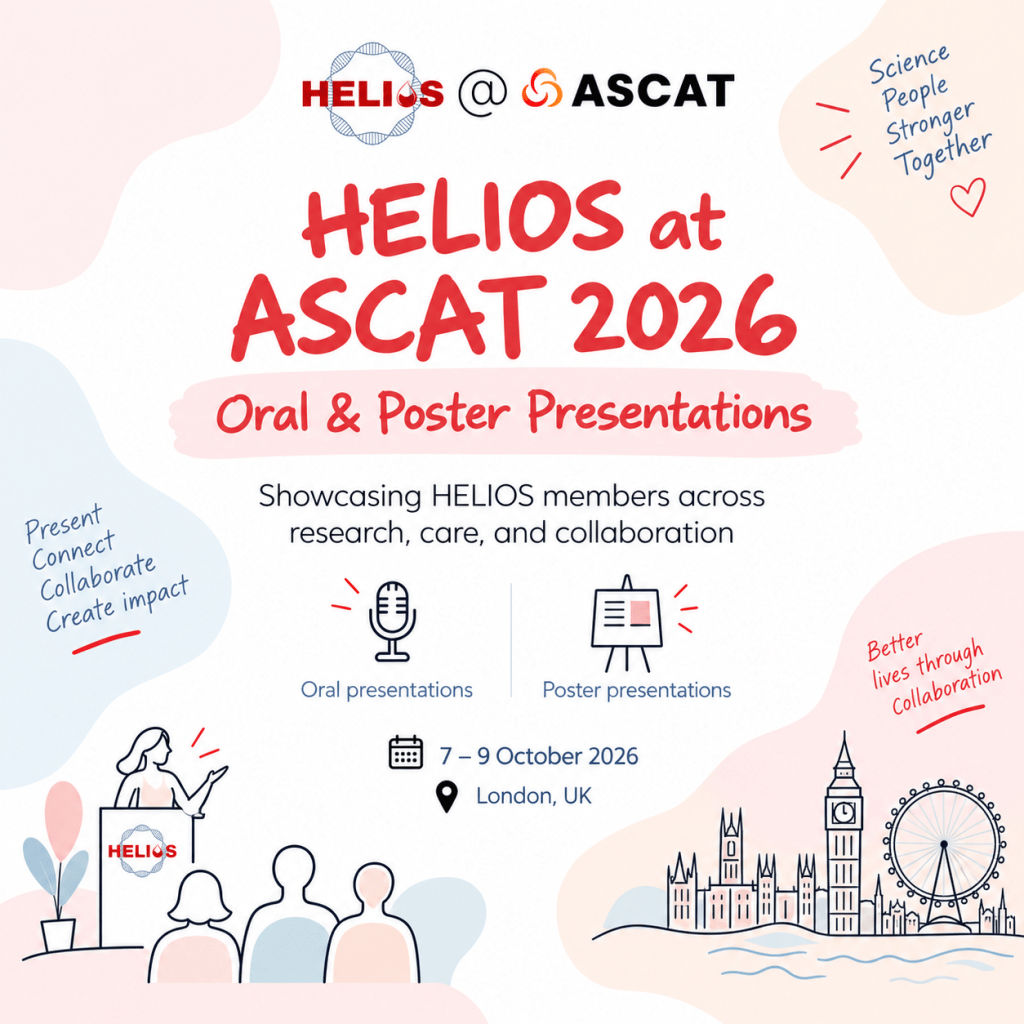

HELIOS Members to Showcase Their Research at ASCAT 2026
HELIOS members will have a strong presence at ASCAT 2026, taking place in London from 7–9 October 2026, with numerous oral and poster presentations showcasing
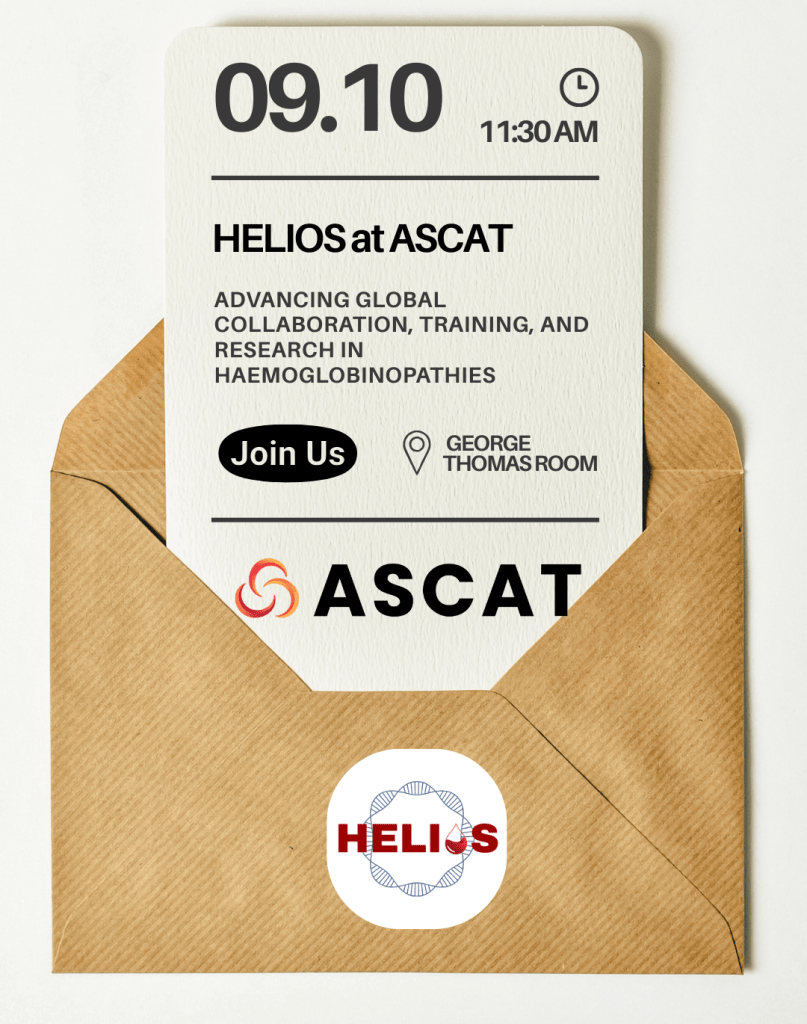
HELIOS returns to ASCAT 2026 for a final year of collaboration, connection and community
HELIOS is delighted to return to ASCAT 2026 in London this October, with both a dedicated scientific session and an exhibition booth, marking our final
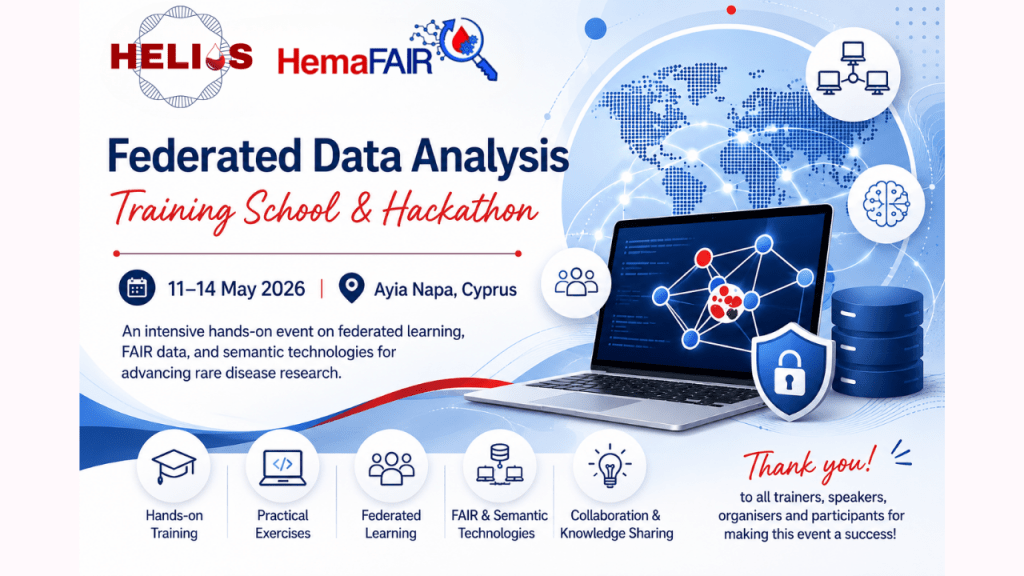
Federated Learning Hackathon Successfully Concluded in Cyprus!
The HemaFAIR and HELIOS COST Action successfully concluded the Federated Data Analysis Training School & Hackathon, held in Ayia Napa, Cyprus, from 11–14 May 2026
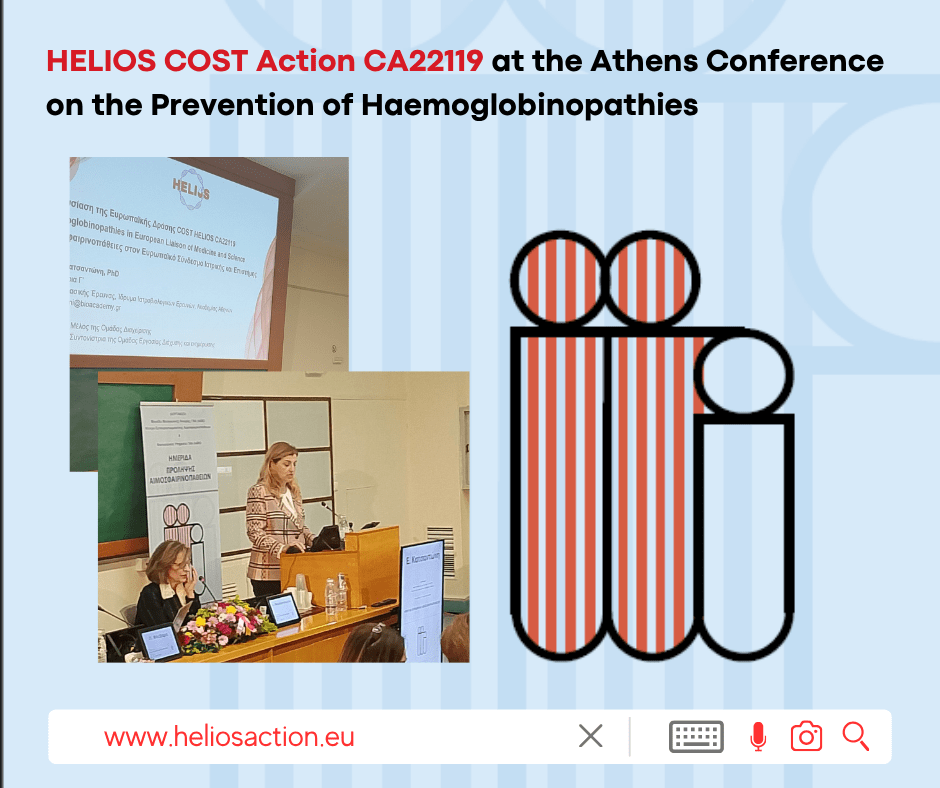
HELIOS at the Athens Prevention of Hemoglobinopathies Conference 2026
On March 28, 2026, a one-day scientific conference on the prevention of haemoglobinopathies took place at the Amphitheatre “Phaedon Fessas” of Laiko General Hospital of

🗞️ New Publication: Mapping Expertise and Educational Needs for Hemoglobinopathies
We are delighted to share that HELIOS Working Group 4 (WG4) has published a new article in Blood & Global Health titled “Mapping Expertise and
📣Call for Expressions of Interest: New Leadership and Coordination Roles within HELIOS
As HELIOS moves into the second half of the project, we are pleased to announce the opening of several leadership and coordination positions within the

🗞️ New HELIOS Research Article Published in HemaSphere!
We are pleased to announce that members of the HELIOS consortium have published a new peer-reviewed research article in the journal HemaSphere. This publication reflects

📊Building Gender-Inclusive Research Cultures – A HELIOS Survey
We’re excited to announce the launch of the HELIOS Survey: Building Gender-Inclusive Research Cultures! The survey aims to collect information on institutional and national practices

📅HELIOS at ASCAT 2025: Join Our Dedicated Session and Booth in London
We are pleased to announce that HELIOS CA22119 will be actively participating in the upcoming ASCAT Conference 2025, taking place at ExCeL London. 📅 On

Exploring AI Knowledge Gaps in Hematology- Abstract PB3837 Accepted at EHA 2025!
Exciting News: Abstract PB3837 Accepted at EHA 2025! We’re proud to announce that our abstract, PB3837, has been accepted for presentation at the European Hematology

NHS Approves Revolutionary CRISPR Gene Therapy for Sickle Cell Disease
NHS Approves Revolutionary CRISPR Gene Therapy for Sickle Cell Disease In a landmark decision, the National Health Service (NHS) in England has approved the use


Our first Short-Term Scientific Mission on standardizing annotation of structural hemoglobinopathies!
In March 2023, the first HELIOS-funded Short-Term Scientific Mission (STSM) was completed. The project was carried out by HELIOS member Maria Xenophontos from the Cyprus